
In collaboration with BAKTI and supported by the SATRIA-1 satellite, we connected remote schools across Indonesia, giving students access to digital learning, wider opportunities and a stronger future.
A hybrid architecture combines SATRIA-1 satellite backhaul with low-band access to connect schools, teachers and surrounding communities.
Results were measured across two rural school locations in Southern Sulawesi.
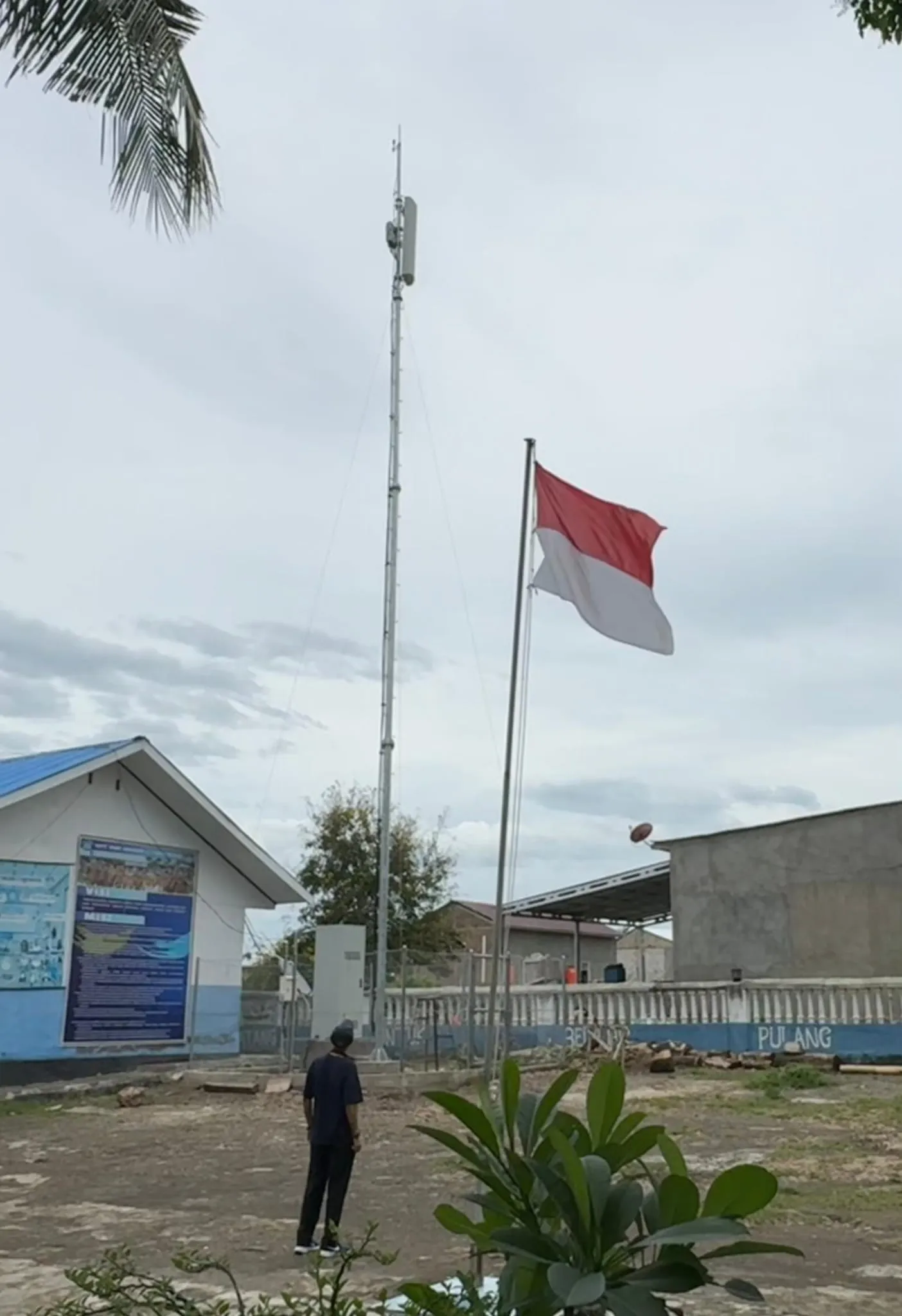
Low-band access carries connectivity beyond the school’s original Wi-Fi reach.
EOIP integration transports the access network across satellite infrastructure. The transport gateway bridged the local Layer 2 requirement across the existing IP-based satellite path.
Availability reached 98.3% in Jeneponto and 99.4% in Gorontalo, with peak throughput of 29 Mbps downlink and 8 Mbps uplink.
The 20-metre tower extended usable coverage beyond the original short-range Wi-Fi footprint, with observed coverage up to 5 km.
Availability, coverage, throughput, utilization and user experience are measured together.
Community usage extends the value of SATRIA-1 connectivity beyond school hours.
The architecture extends local access while preserving the existing satellite service.
The Mini School Project demonstrates how existing satellite infrastructure can support wider access and better utilization. Expansion should prioritise suitable schools where available capacity, local demand and field evidence support a wider footprint.
One satellite connection. A wider circle of opportunity.
Designed to extend meaningful access while building on existing national infrastructure.