
The Jakarta laboratory programme connected every essential layer and completed the first mission-critical platform call.
In collaboration with Nokia in Jakarta, SEATELSAT measured the integrated platform’s end-to-end performance and validated a controlled-laboratory quality baseline supporting mission-critical services.
Integrated in the laboratory. Ready for the next stage.
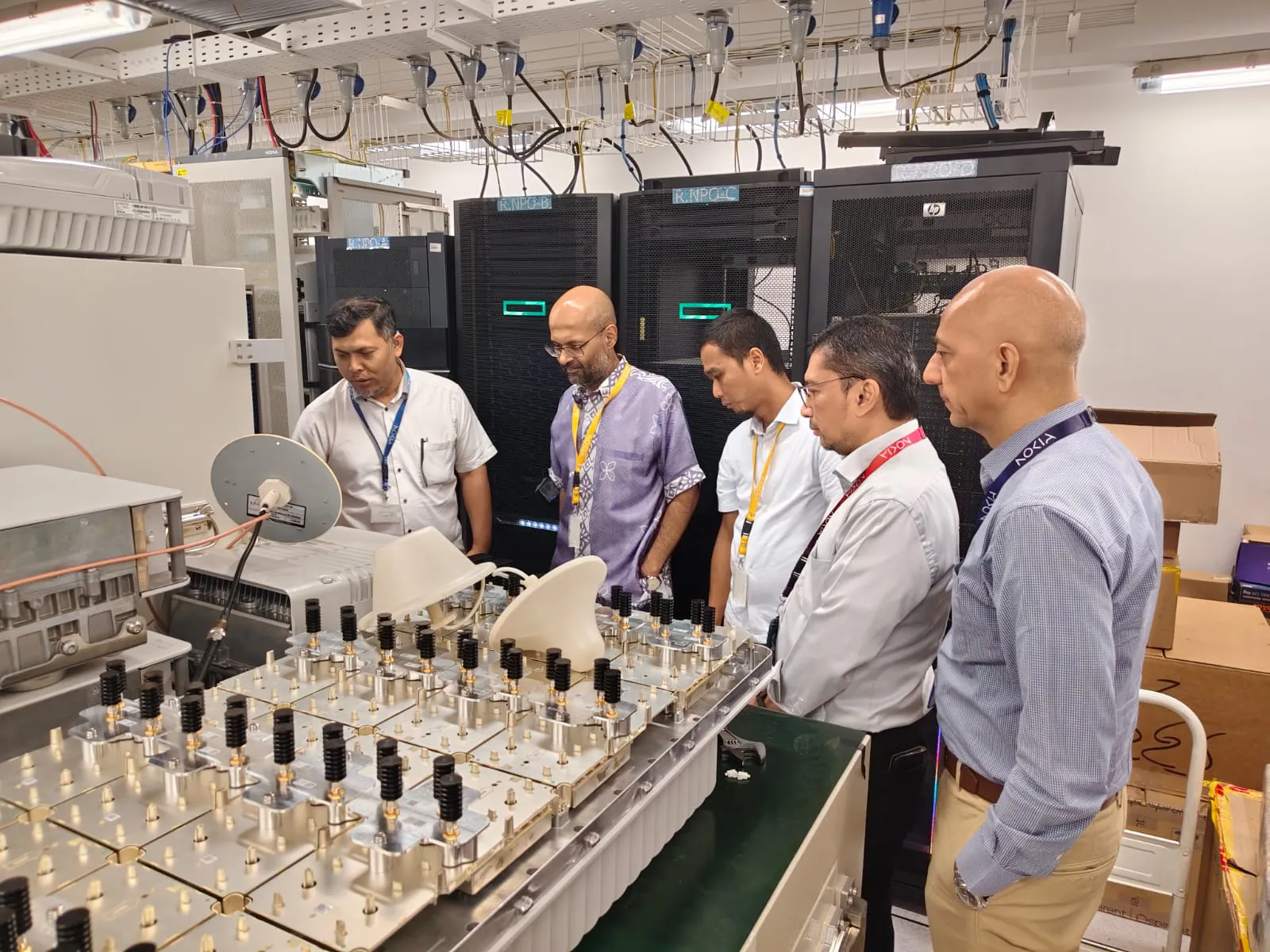
Operational devices, private radio network, core infrastructure, mission-critical platform, and command and coordination work together as one chain.
Radio access and subscriber connectivity, core control and service infrastructure, mission-critical application environment, operational devices and user workflows.
The first mission-critical platform call demonstrated end-to-end integration across the complete communications chain, establishing a practical foundation for the next validation stage.
Measured in the Jakarta controlled-laboratory environment: 27.4 Mbps download, 8.9 Mbps upload, 29 ms latency and 4 ms jitter. Results reflect the configured lab setup and are not final field-performance commitments.
Throughput, latency and jitter were measured across the integrated chain.
Results support progression toward mission-critical service-quality objectives. Formal operational compliance remains subject to field validation and service-level acceptance.
Field validation is next: coverage, resilience, mobility and operational workflows to be evaluated.
Moving the integrated platform into real operating conditions to evaluate service performance, resilience and operational workflows. Laboratory integration is completed, field validation is next, and operational readiness is the direction.
Optimise in the laboratory. Validate in the field.
Joint engineering continues to strengthen performance and prepare the platform for real operating conditions.